Skip to content
Active Fluid Control

Research

Papers, preprints, and talks from the project. Entries link to the manuscript, recording, companion source code, and the hardware configuration used in the experiments, where applicable.

Publications.

  • Featured
    2025 · arXiv preprint Preprint

    Sparks of human-like skills acquisition in modern artificial intelligence

    A. Terpin, R. D'Andrea

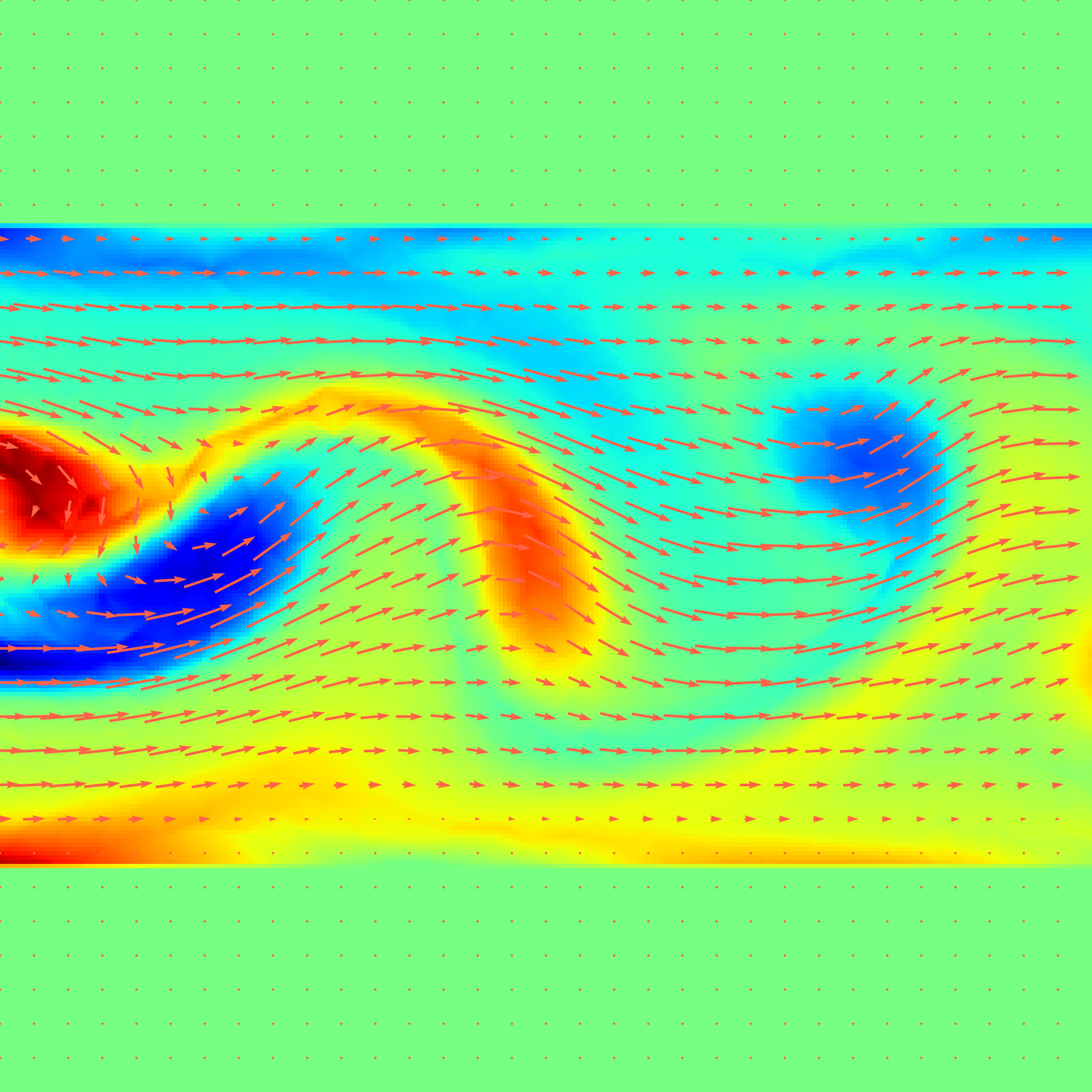
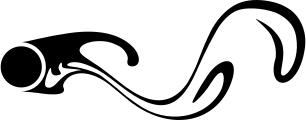
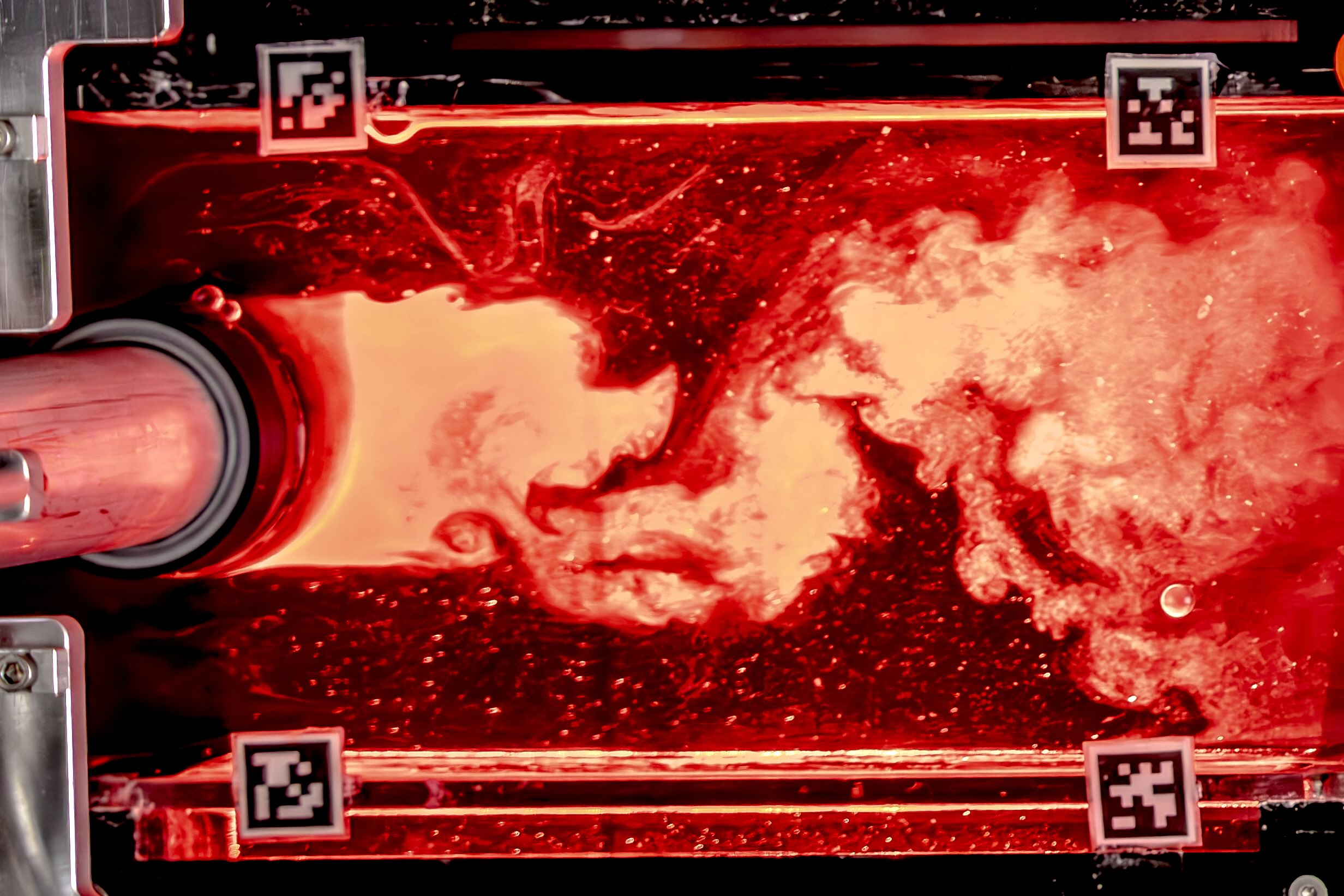
    Many high-performance human activities are executed with little or no external feedback: think of a figure skater landing a triple jump, a pitcher throwing a curveball for a strike, or a barista pouring latte art. To study the process of skill acquisition under fully controlled conditions, we bypass human subjects. Instead, we directly interface a generalist reinforcement learning agent with a spinning cylinder in a tabletop circulating water channel to maximize or minimize drag. This setup has several desirable properties. First, it is a physical system, with the rich interactions and complex dynamics that only the physical world has: the flow is highly chaotic and extremely difficult, if not impossible, to model or simulate accurately. Second, the objective — drag minimization or maximization — is easy to state and can be captured directly in the reward, yet good strategies are not obvious beforehand. Third, decades-old experimental studies provide recipes for simple, high-performance open-loop policies. Finally, the setup is inexpensive and far easier to reproduce than human studies. In our experiments we find that high-dimensional flow feedback lets the agent discover high-performance drag-control strategies with only minutes of real-world interaction. When we later replay the same action sequences without any feedback, we obtain almost identical performance. This shows that feedback, and in particular flow feedback, is not needed to execute the learned policy. Surprisingly, without flow feedback during training the agent fails to discover any well-performing policy in drag maximization, but still succeeds in drag minimization, albeit more slowly and less reliably. Our studies show that learning a high-performance skill can require richer information than executing it, and learning conditions can be kind or wicked depending solely on the goal, not on dynamics or policy complexity.

    2025 · arXiv preprint Preprint

    Sparks of human-like skills acquisition in modern artificial intelligence

    A. Terpin, R. D'Andrea

    Many high-performance human activities are executed with little or no external feedback: think of a figure skater landing a triple jump, a pitcher throwing a curveball for a strike, or a barista pouring latte art. To study the process of skill acquisition under fully controlled conditions, we bypass human subjects. Instead, we directly interface a generalist reinforcement learning agent with a spinning cylinder in a tabletop circulating water channel to maximize or minimize drag. This setup has several desirable properties. First, it is a physical system, with the rich interactions and complex dynamics that only the physical world has: the flow is highly chaotic and extremely difficult, if not impossible, to model or simulate accurately. Second, the objective — drag minimization or maximization — is easy to state and can be captured directly in the reward, yet good strategies are not obvious beforehand. Third, decades-old experimental studies provide recipes for simple, high-performance open-loop policies. Finally, the setup is inexpensive and far easier to reproduce than human studies. In our experiments we find that high-dimensional flow feedback lets the agent discover high-performance drag-control strategies with only minutes of real-world interaction. When we later replay the same action sequences without any feedback, we obtain almost identical performance. This shows that feedback, and in particular flow feedback, is not needed to execute the learned policy. Surprisingly, without flow feedback during training the agent fails to discover any well-performing policy in drag maximization, but still succeeds in drag minimization, albeit more slowly and less reliably. Our studies show that learning a high-performance skill can require richer information than executing it, and learning conditions can be kind or wicked depending solely on the goal, not on dynamics or policy complexity.

    Hardware: v0
  • 2026 · SoftwareX, vol. 34, 102641 Journal

    Flow Gym: a framework for the development, benchmarking, training, and deployment of flow-field quantification methods

    F. Banelli, A. Terpin, A. Bonomi, R. D'Andrea

    Particle image velocimetry (PIV) and related optical-flow methods are widely used to quantify fluid motion, but their development and evaluation are often hindered by fragmented software, inconsistent interfaces, and limited reproducibility. To address these challenges, we present Flow Gym, a framework for developing, benchmarking, training, and deploying flow-field quantification methods, with a primary focus on PIV. Its core contribution is a standardized interface that allows classical and learning-based algorithms to be integrated, compared, and deployed within a common pipeline. The framework includes JAX implementations and wrappers for existing methods, modular pre-processing and post-processing components, and utilities for training and benchmarking. By leveraging JAX, Flow Gym supports hardware-accelerated execution while remaining interoperable with external implementations from libraries such as OpenCV and PyTorch. It can operate on both synthetic and experimental data and supports the same workflow for offline benchmarking and real-time deployment. Flow Gym is designed to improve reproducibility, reduce barriers to method development, and facilitate the translation of flow-field quantification algorithms from research to experimental settings.

    2026 · SoftwareX, vol. 34, 102641 Journal

    Flow Gym: a framework for the development, benchmarking, training, and deployment of flow-field quantification methods

    F. Banelli, A. Terpin, A. Bonomi, R. D'Andrea

    Particle image velocimetry (PIV) and related optical-flow methods are widely used to quantify fluid motion, but their development and evaluation are often hindered by fragmented software, inconsistent interfaces, and limited reproducibility. To address these challenges, we present Flow Gym, a framework for developing, benchmarking, training, and deploying flow-field quantification methods, with a primary focus on PIV. Its core contribution is a standardized interface that allows classical and learning-based algorithms to be integrated, compared, and deployed within a common pipeline. The framework includes JAX implementations and wrappers for existing methods, modular pre-processing and post-processing components, and utilities for training and benchmarking. By leveraging JAX, Flow Gym supports hardware-accelerated execution while remaining interoperable with external implementations from libraries such as OpenCV and PyTorch. It can operate on both synthetic and experimental data and supports the same workflow for offline benchmarking and real-time deployment. Flow Gym is designed to improve reproducibility, reduce barriers to method development, and facilitate the translation of flow-field quantification algorithms from research to experimental settings.

    DOI Code
    Hardware: v0 , v1
  • 2026 · SoftwareX, vol. 34, 102642 Journal

    SynthPix: a lightspeed PIV image generator

    A. Terpin, A. Bonomi, F. Banelli, R. D'Andrea

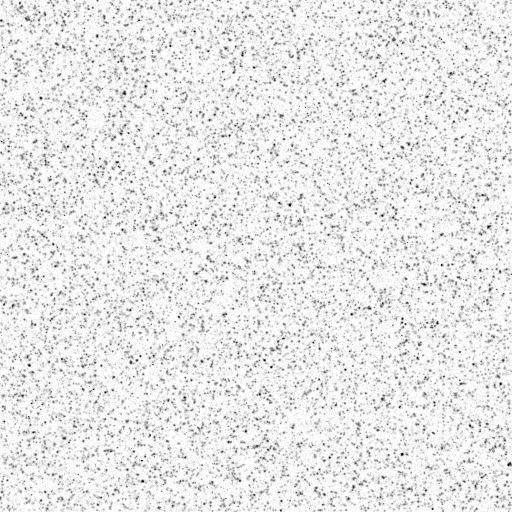
    We describe SynthPix, a synthetic image generator for Particle Image Velocimetry (PIV) with a focus on performance and parallelism on accelerators, implemented in JAX. SynthPix produces PIV image pairs from prescribed flow fields while exposing a configuration interface aligned with common PIV imaging and acquisition parameters (e.g., seeding density, particle image size, illumination nonuniformity, noise, blur, and timing). In contrast to offline dataset generation workflows, SynthPix is built to stream images on-the-fly directly into learning and benchmarking pipelines, enabling data-hungry methods and closed-loop procedures — such as adaptive sampling and acquisition/parameter co-design — without prohibitive storage and input–output costs. We demonstrate that SynthPix is compatible with a broad range of application scenarios, including controlled laboratory experiments and riverine image velocimetry, and supports rapid sweeps over nuisance factors for systematic robustness evaluation. SynthPix is a tool that supports the flow quantification community and in this paper we describe the main ideas behind the software package.

    2026 · SoftwareX, vol. 34, 102642 Journal

    SynthPix: a lightspeed PIV image generator

    A. Terpin, A. Bonomi, F. Banelli, R. D'Andrea

    We describe SynthPix, a synthetic image generator for Particle Image Velocimetry (PIV) with a focus on performance and parallelism on accelerators, implemented in JAX. SynthPix produces PIV image pairs from prescribed flow fields while exposing a configuration interface aligned with common PIV imaging and acquisition parameters (e.g., seeding density, particle image size, illumination nonuniformity, noise, blur, and timing). In contrast to offline dataset generation workflows, SynthPix is built to stream images on-the-fly directly into learning and benchmarking pipelines, enabling data-hungry methods and closed-loop procedures — such as adaptive sampling and acquisition/parameter co-design — without prohibitive storage and input–output costs. We demonstrate that SynthPix is compatible with a broad range of application scenarios, including controlled laboratory experiments and riverine image velocimetry, and supports rapid sweeps over nuisance factors for systematic robustness evaluation. SynthPix is a tool that supports the flow quantification community and in this paper we describe the main ideas behind the software package.

    DOI Code
    Hardware: v0 , v1
  • 2025 · arXiv preprint Preprint

    Particle Image Velocimetry refinement via consensus ADMM

    A. Bonomi, F. Banelli, A. Terpin

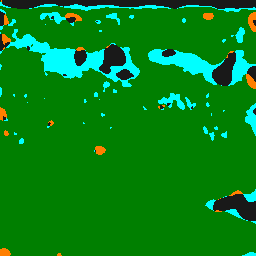
    Particle Image Velocimetry (PIV) is an imaging technique in experimental fluid dynamics that quantifies flow fields around bluff bodies by analyzing the displacement of neutrally buoyant tracer particles immersed in the fluid. Traditional PIV approaches typically depend on tuning parameters specific to the imaging setup, making the performance sensitive to variations in illumination, flow conditions, and seeding density. On the other hand, even state-of-the-art machine learning methods for flow quantification are fragile outside their training set. In our experiments, we observed that flow quantification would improve if different tunings (or algorithms) were applied to different regions of the same image pair. In this work, we parallelize the instantaneous flow quantification with multiple algorithms and adopt a consensus framework based on the alternating direction method of multipliers, seamlessly incorporating priors such as smoothness and incompressibility. We perform several numerical experiments to demonstrate the benefits of this approach. For instance, we achieve a decrease in end-point-error of up to 20% of a dense-inverse-search estimator at an inference rate of 60 Hz, and we show how this performance boost can be increased further with outlier rejection. Our method is implemented in JAX, effectively exploiting hardware acceleration, and integrated in Flow Gym, enabling (i) reproducible comparisons with the state-of-the-art, (ii) testing different base algorithms, (iii) straightforward deployment for active fluid control applications.

    2025 · arXiv preprint Preprint

    Particle Image Velocimetry refinement via consensus ADMM

    A. Bonomi, F. Banelli, A. Terpin

    Particle Image Velocimetry (PIV) is an imaging technique in experimental fluid dynamics that quantifies flow fields around bluff bodies by analyzing the displacement of neutrally buoyant tracer particles immersed in the fluid. Traditional PIV approaches typically depend on tuning parameters specific to the imaging setup, making the performance sensitive to variations in illumination, flow conditions, and seeding density. On the other hand, even state-of-the-art machine learning methods for flow quantification are fragile outside their training set. In our experiments, we observed that flow quantification would improve if different tunings (or algorithms) were applied to different regions of the same image pair. In this work, we parallelize the instantaneous flow quantification with multiple algorithms and adopt a consensus framework based on the alternating direction method of multipliers, seamlessly incorporating priors such as smoothness and incompressibility. We perform several numerical experiments to demonstrate the benefits of this approach. For instance, we achieve a decrease in end-point-error of up to 20% of a dense-inverse-search estimator at an inference rate of 60 Hz, and we show how this performance boost can be increased further with outlier rejection. Our method is implemented in JAX, effectively exploiting hardware acceleration, and integrated in Flow Gym, enabling (i) reproducible comparisons with the state-of-the-art, (ii) testing different base algorithms, (iii) straightforward deployment for active fluid control applications.

    Hardware: v0

Talks.

  • Swiss CLOCK Summit 2025 Engelberg, Switzerland

    Plenary talk at the Swiss CLOCK Summit 2025

    Raffaello D'Andrea

  • American Control Conference (ACC) 2025 Denver, USA

    Models are Dead, Long Live Models!

    Raffaello D'Andrea