Skip to content
Active Fluid Control
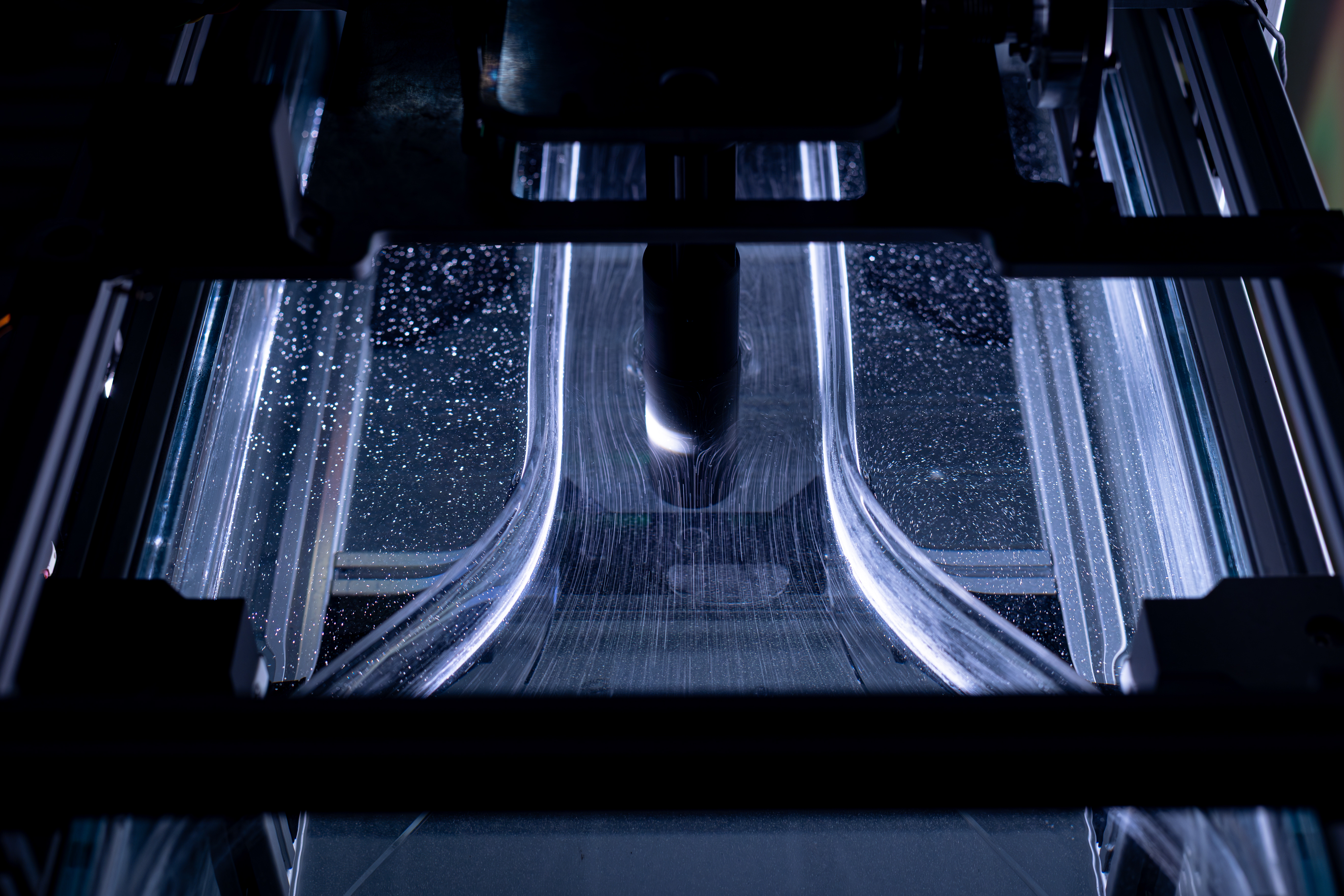
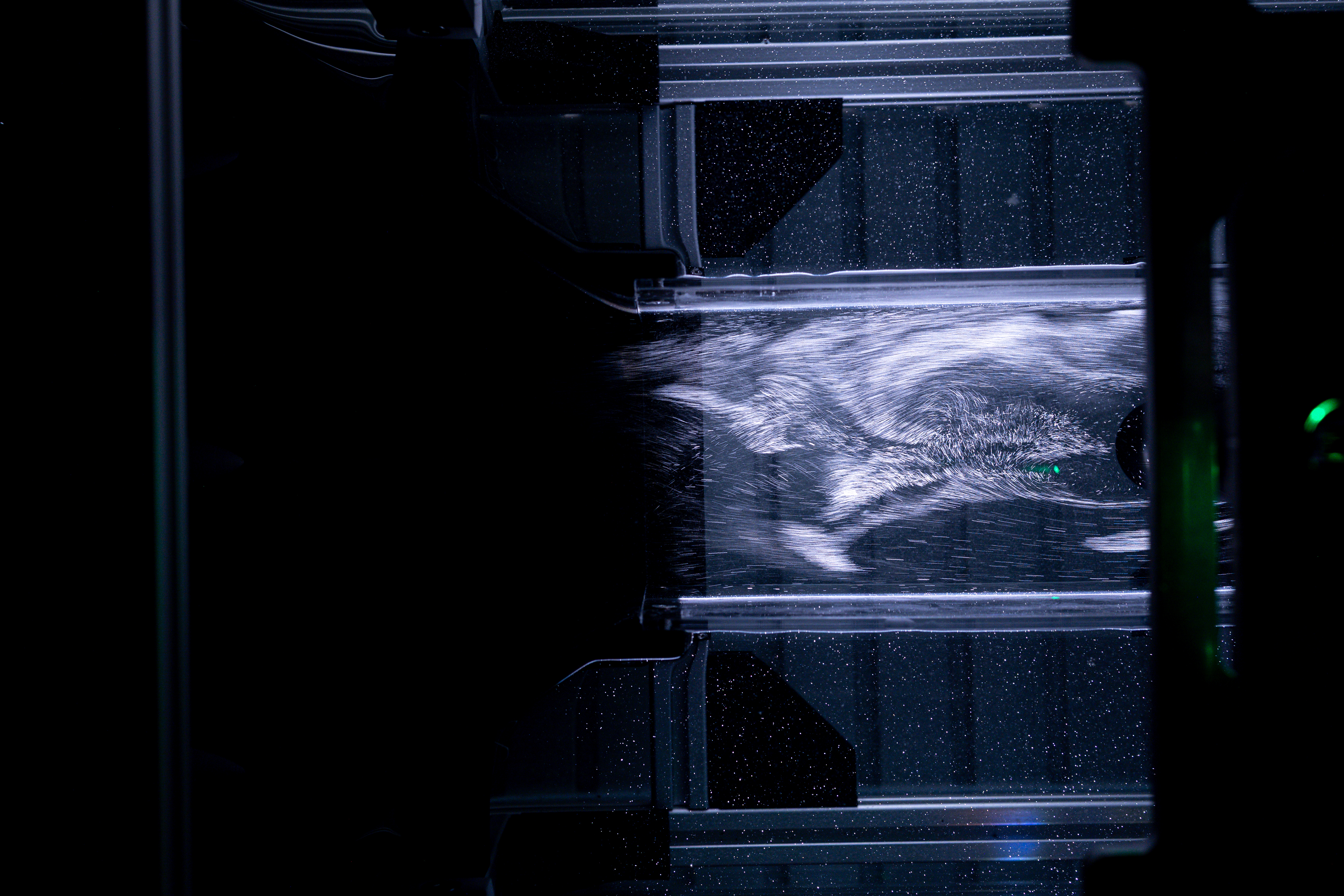
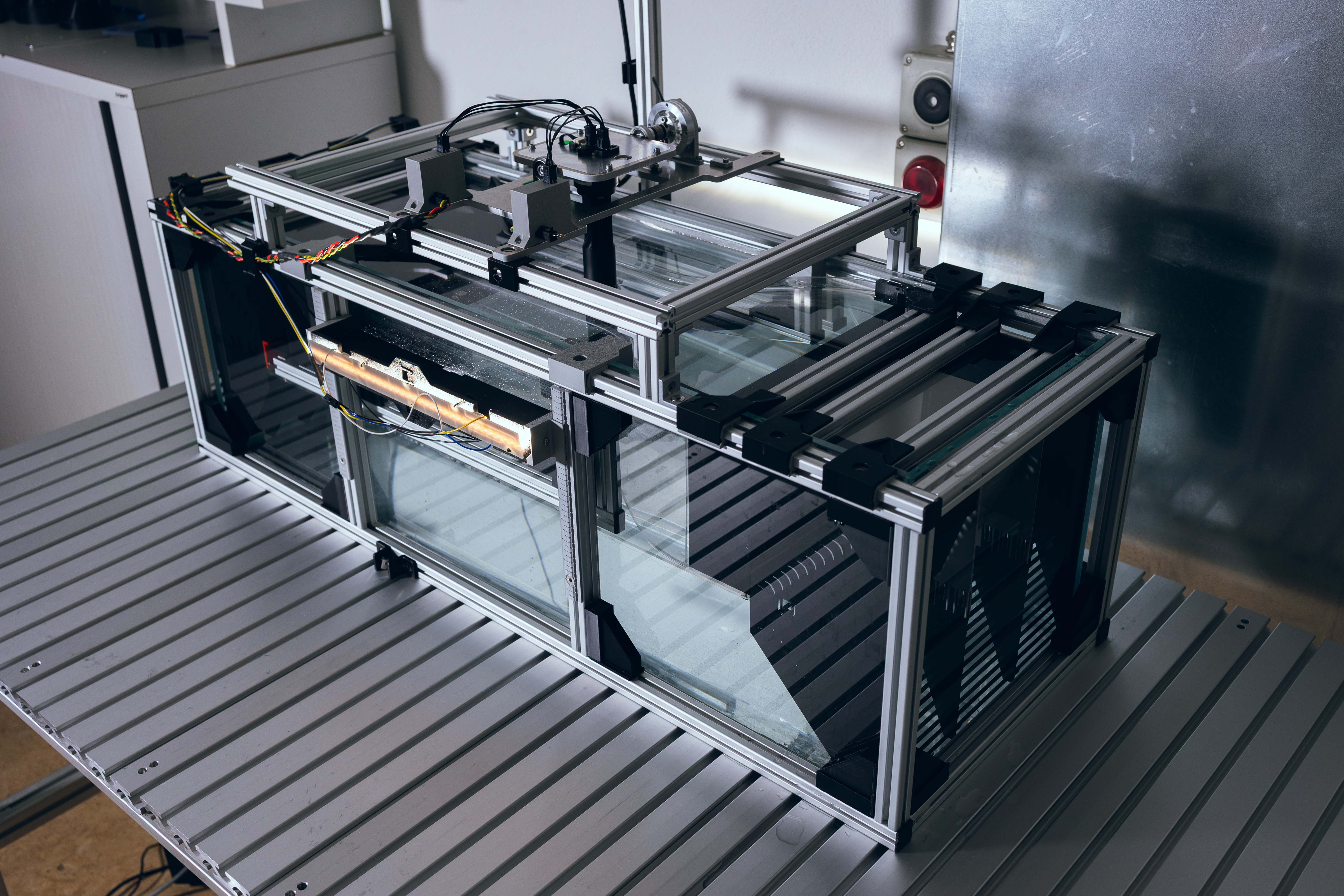
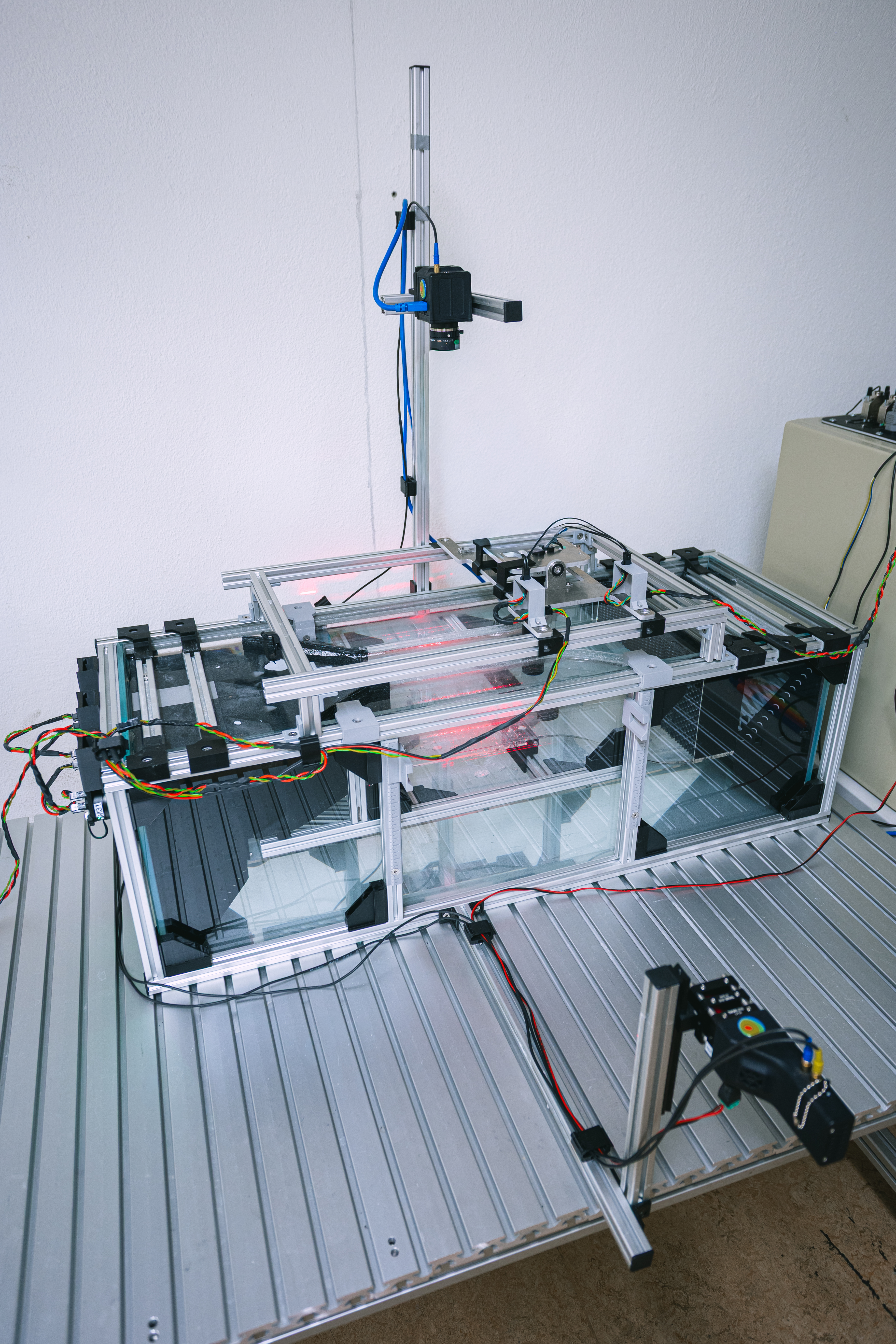
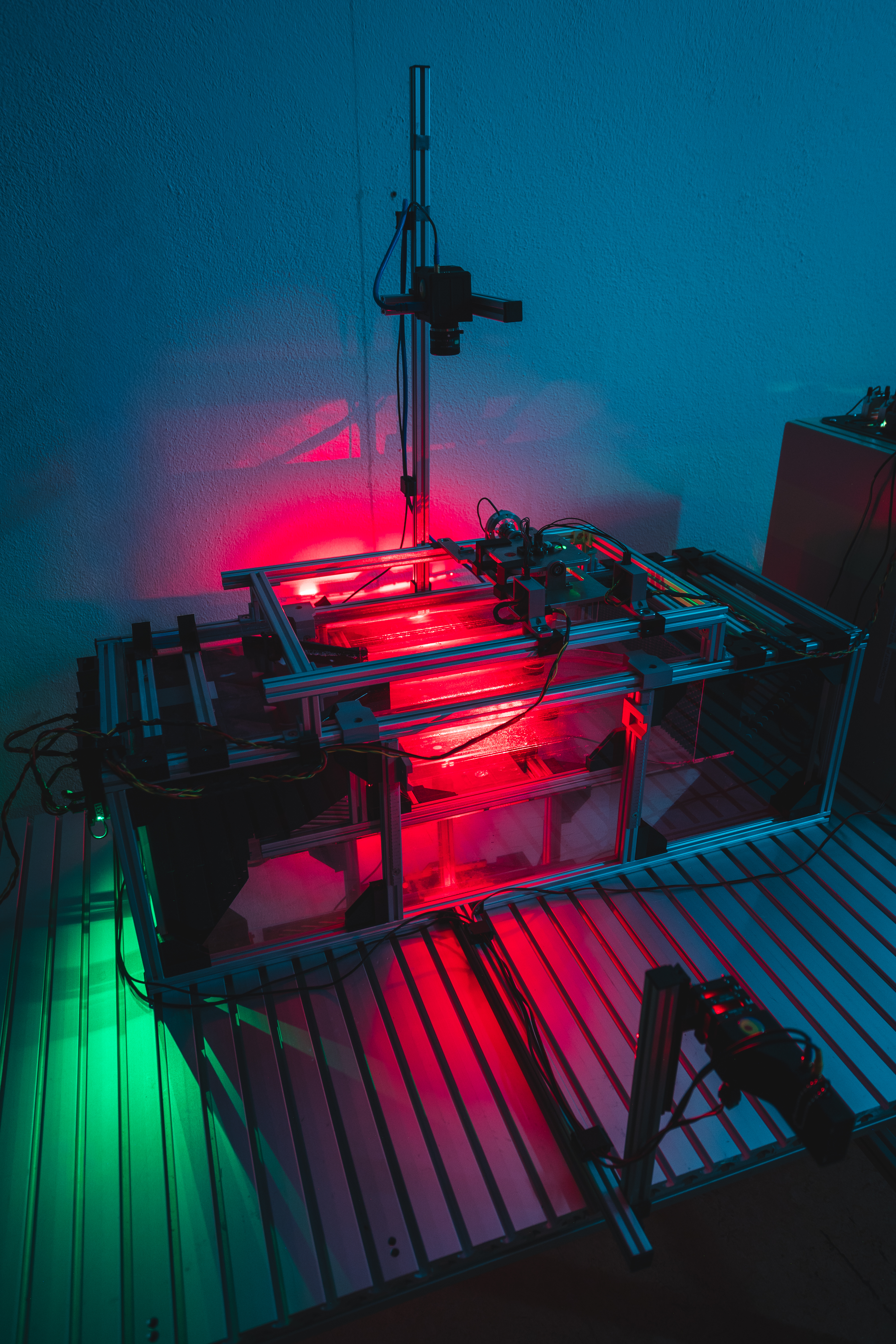
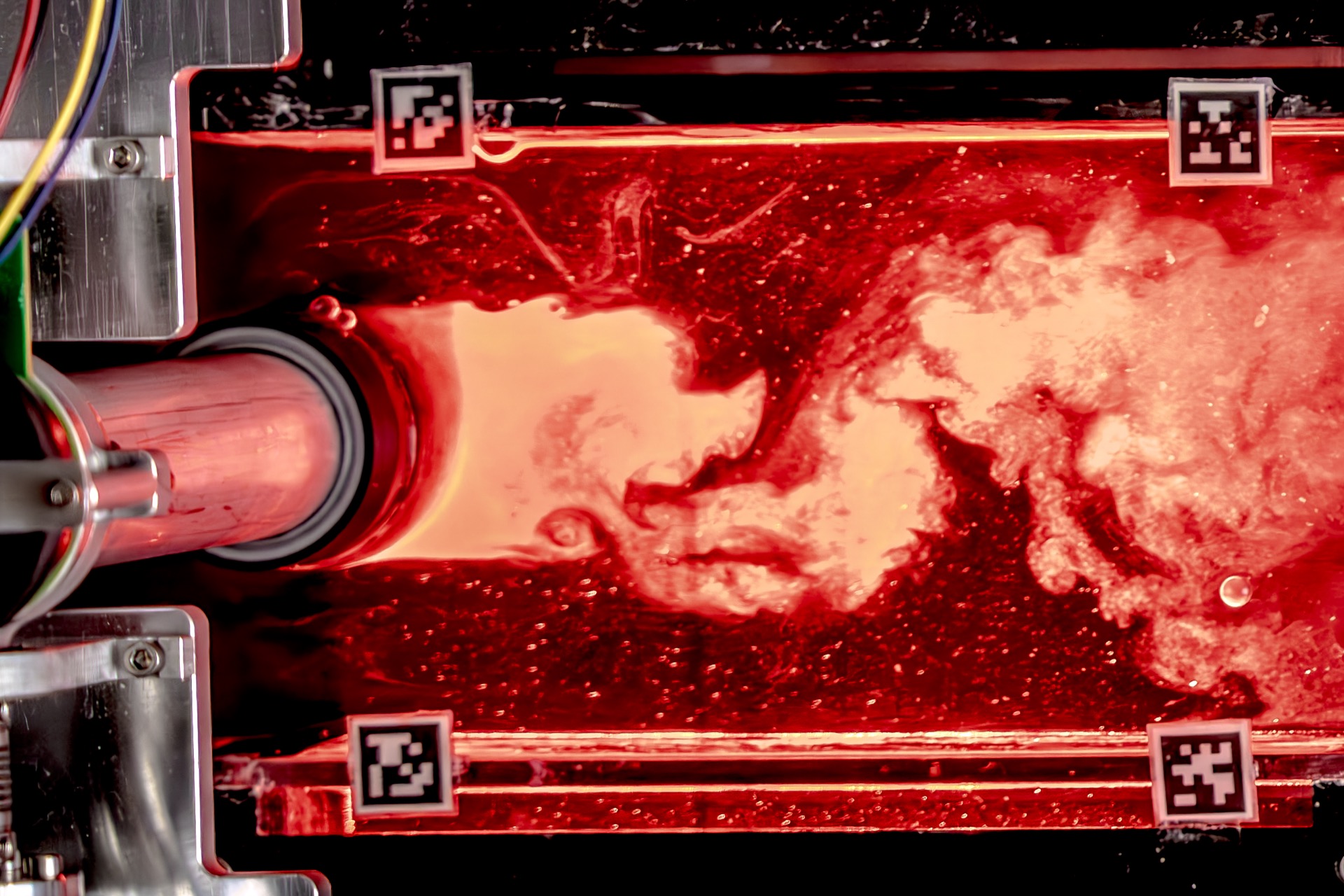
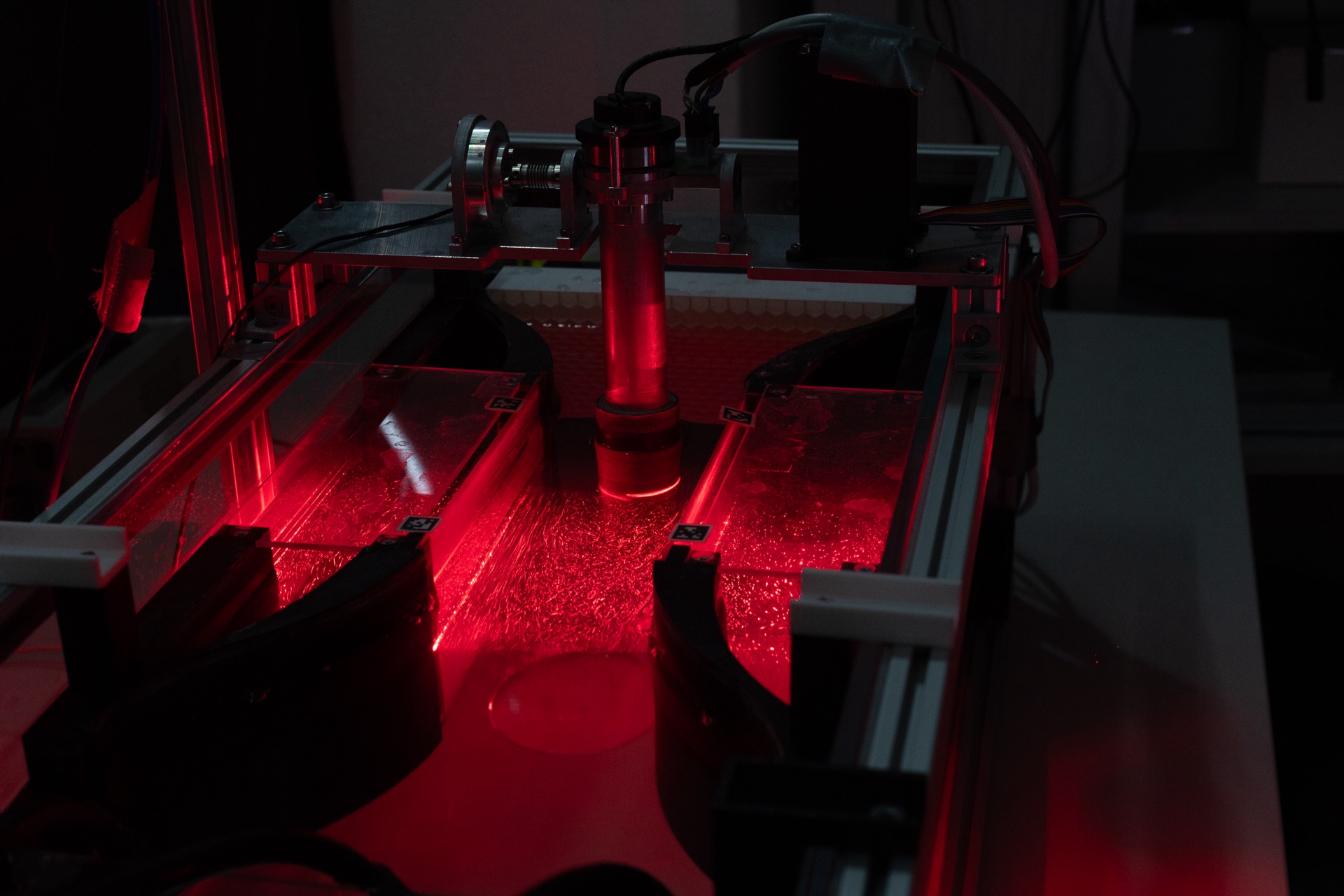
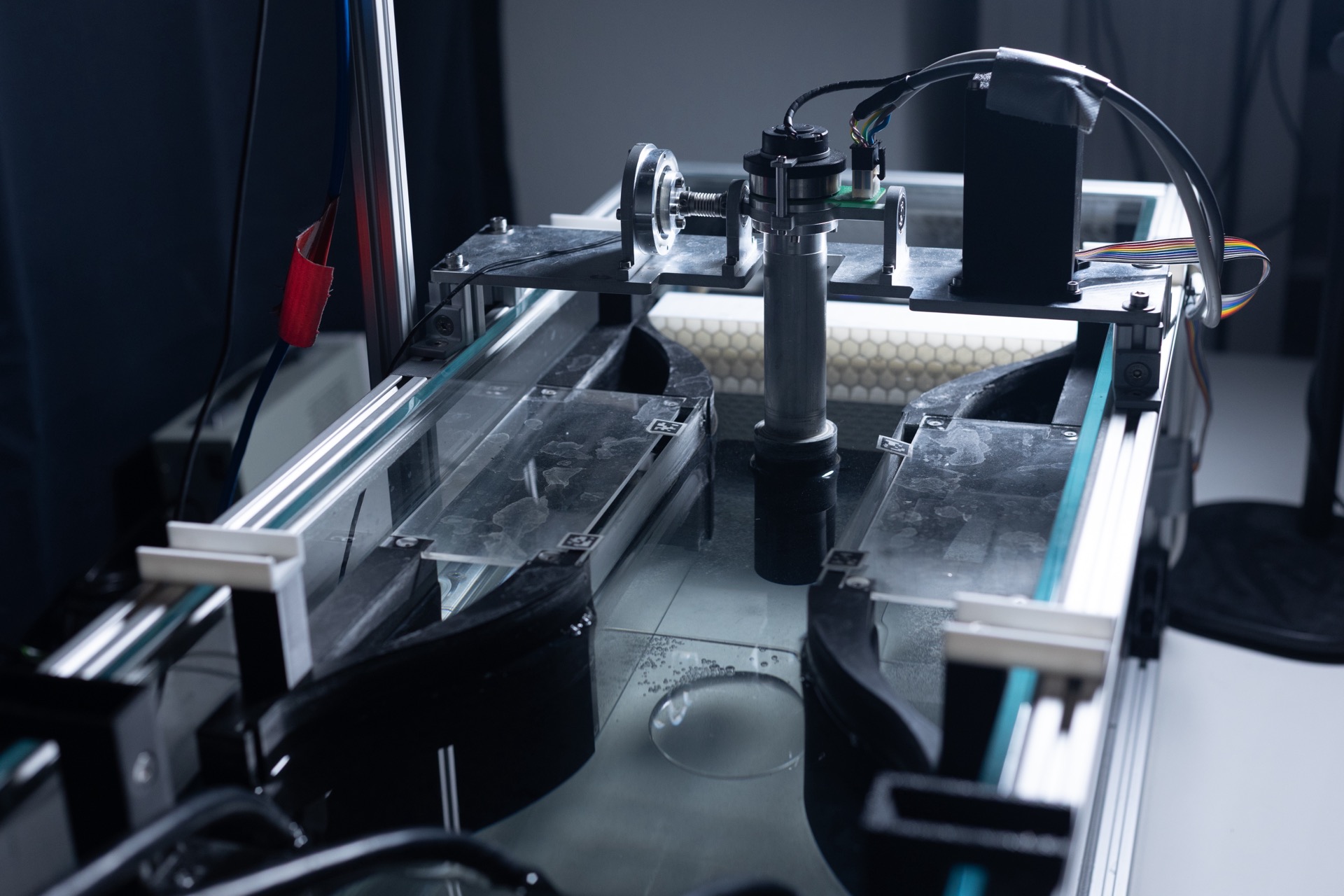
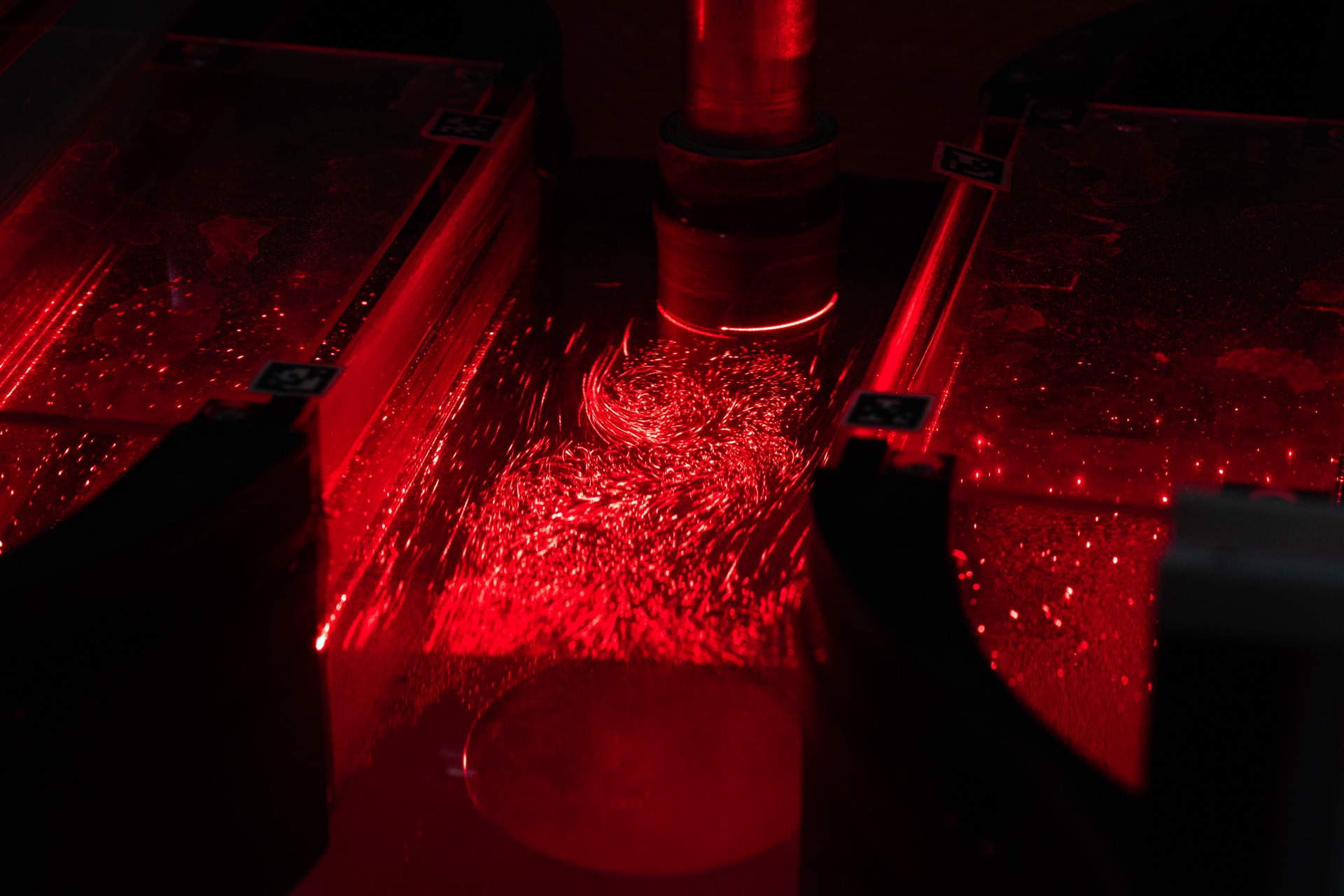
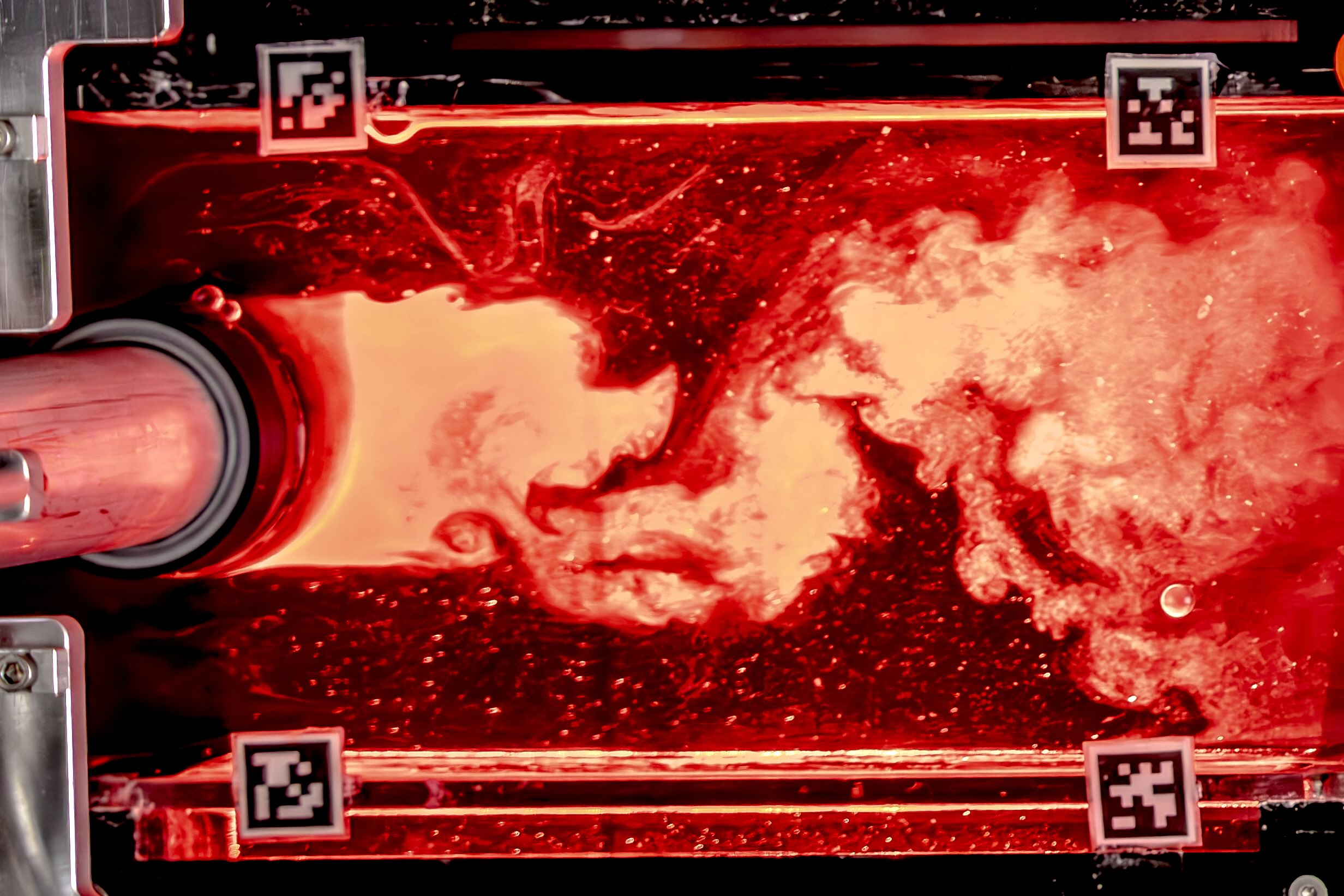
Cylinder wake in the Active Fluid Control water channel

Active fluid control in the physical world.

An open frontier in physical intelligence.

Active control of fluid flows remains one of the most compelling open frontiers in physical intelligence: it sits at the intersection of infinite-dimensional dynamical systems, partial observation, learning, control, and real-world experimentation.

We train reinforcement-learning agents directly on physical experiments — real data, not CFD. The flows we care about are hard to simulate accurately and efficiently, and rich, vision-based perception lets agents find high-performance control strategies in minutes of real-world interaction.

By combining dense flow measurements during training with reduced sensing at execution, we aim to understand when rich observations are necessary, when they can be compressed away, and how modern learning architectures can be grounded in the physics of continuum systems.

This opens a path toward new theory, algorithms, and experimental benchmarks for AI-driven control of fluids — with applications ranging from drag reduction and wake steering to energy-efficient transport and environmental flow management.

Build on it. Help it spread.

All the active fluid control work on this site is open: hardware, software, and methods. Build it, fork it, run it, take it further. When you share what you make in a social post, a talk, a blog, or a paper, drop in a line of credit. It helps the work spread and grow. BibTeX for papers, a single line for everything else.

Suggested credit

Active Fluid Control — ETH Zürich (A. Terpin, R. D'Andrea). activefluidcontrol.com

More info for citations
Featured
2025 · arXiv preprint Preprint

Privileged observations enable rapid and reliable policy discovery directly in the physical world

A. Terpin, R. D'Andrea

People refine many high-performance skills using information that is available during practice but unavailable or presented differently during later action: think of a figure skater landing a triple jump, a pitcher throwing a curveball for a strike, or a barista pouring latte art. We ask whether privileged information—information available during training but not during execution—about the state of a physical system can be decisive for discovering a high-performing control policy even when reproducing the resulting behavior does not require that information. For this, we directly interface a generalist reinforcement learning agent with a spinning cylinder in a tabletop water channel to maximize or minimize drag. The agent acts directly on the physical flow and receives dense observations of the cylinder wake. This setup has several desirable properties. First, it is a physical system, with the rich interactions and complex dynamics that only the physical world has: the flow is highly chaotic and extremely difficult, if not impossible, to model or simulate accurately. Second, we can state the objective—drag minimization or maximization—simply and encode it directly in the reward, yet good strategies are not obvious beforehand. Third, decades-old experimental studies provide recipes for simple, high-performance, periodic open-loop policies. Relative to the common no-control reference, these periodic open-loop policies increase drag by 26.6% ± 0.7% and reduce it by 29.7% ± 1.3%. With flow observations, the agent learns within tens of minutes closed-loop policies that increase drag by 25.5% ± 0.9% and reduce it by 32.4% ± 1.6%. We record action trajectories during online policy execution and can subsequently replay them open loop as fixed sequences without flow observations; these replays increase drag by 23.2% ± 2.2% and reduce it by 32.1% ± 3.0%. However, when we withhold flow observations during training, the agent still discovers high-performing drag-minimizing policies (31.4% ± 2.1% drag reduction), but no run learns a high-performing drag-maximizing policy (1.8% ± 4.3% drag increase). The experiments provide a physical demonstration that privileged observations can be decisive for policy discovery even in the extreme scenario when we can subsequently replay the resulting action trajectories successfully. Practically, our findings suggest that rich observations accessible during laboratory training can be powerful even when their continuous acquisition and processing would be impractical at deployment.
2025 · arXiv preprint Preprint

Privileged observations enable rapid and reliable policy discovery directly in the physical world

A. Terpin, R. D'Andrea

People refine many high-performance skills using information that is available during practice but unavailable or presented differently during later action: think of a figure skater landing a triple jump, a pitcher throwing a curveball for a strike, or a barista pouring latte art. We ask whether privileged information—information available during training but not during execution—about the state of a physical system can be decisive for discovering a high-performing control policy even when reproducing the resulting behavior does not require that information. For this, we directly interface a generalist reinforcement learning agent with a spinning cylinder in a tabletop water channel to maximize or minimize drag. The agent acts directly on the physical flow and receives dense observations of the cylinder wake. This setup has several desirable properties. First, it is a physical system, with the rich interactions and complex dynamics that only the physical world has: the flow is highly chaotic and extremely difficult, if not impossible, to model or simulate accurately. Second, we can state the objective—drag minimization or maximization—simply and encode it directly in the reward, yet good strategies are not obvious beforehand. Third, decades-old experimental studies provide recipes for simple, high-performance, periodic open-loop policies. Relative to the common no-control reference, these periodic open-loop policies increase drag by 26.6% ± 0.7% and reduce it by 29.7% ± 1.3%. With flow observations, the agent learns within tens of minutes closed-loop policies that increase drag by 25.5% ± 0.9% and reduce it by 32.4% ± 1.6%. We record action trajectories during online policy execution and can subsequently replay them open loop as fixed sequences without flow observations; these replays increase drag by 23.2% ± 2.2% and reduce it by 32.1% ± 3.0%. However, when we withhold flow observations during training, the agent still discovers high-performing drag-minimizing policies (31.4% ± 2.1% drag reduction), but no run learns a high-performing drag-maximizing policy (1.8% ± 4.3% drag increase). The experiments provide a physical demonstration that privileged observations can be decisive for policy discovery even in the extreme scenario when we can subsequently replay the resulting action trajectories successfully. Practically, our findings suggest that rich observations accessible during laboratory training can be powerful even when their continuous acquisition and processing would be impractical at deployment.
arXiv Data
Hardware: v0
2026 · SoftwareX, vol. 34, 102642 Journal

SynthPix: a lightspeed PIV image generator

A. Terpin, A. Bonomi, F. Banelli, R. D'Andrea

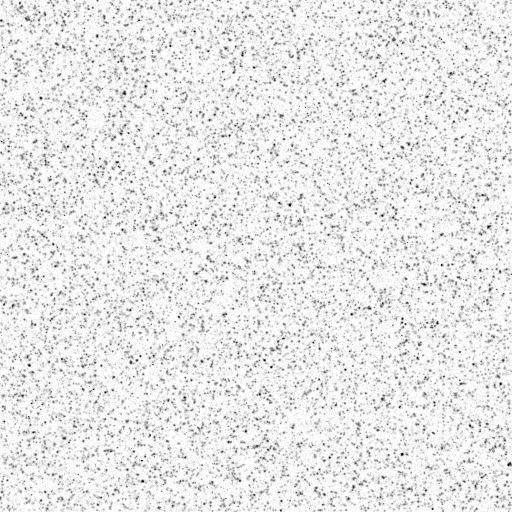
We describe SynthPix, a synthetic image generator for Particle Image Velocimetry (PIV) with a focus on performance and parallelism on accelerators, implemented in JAX. SynthPix produces PIV image pairs from prescribed flow fields while exposing a configuration interface aligned with common PIV imaging and acquisition parameters (e.g., seeding density, particle image size, illumination nonuniformity, noise, blur, and timing). In contrast to offline dataset generation workflows, SynthPix is built to stream images on-the-fly directly into learning and benchmarking pipelines, enabling data-hungry methods and closed-loop procedures — such as adaptive sampling and acquisition/parameter co-design — without prohibitive storage and input–output costs. We demonstrate that SynthPix is compatible with a broad range of application scenarios, including controlled laboratory experiments and riverine image velocimetry, and supports rapid sweeps over nuisance factors for systematic robustness evaluation. SynthPix is a tool that supports the flow quantification community and in this paper we describe the main ideas behind the software package.

2026 · SoftwareX, vol. 34, 102642 Journal

SynthPix: a lightspeed PIV image generator

A. Terpin, A. Bonomi, F. Banelli, R. D'Andrea

We describe SynthPix, a synthetic image generator for Particle Image Velocimetry (PIV) with a focus on performance and parallelism on accelerators, implemented in JAX. SynthPix produces PIV image pairs from prescribed flow fields while exposing a configuration interface aligned with common PIV imaging and acquisition parameters (e.g., seeding density, particle image size, illumination nonuniformity, noise, blur, and timing). In contrast to offline dataset generation workflows, SynthPix is built to stream images on-the-fly directly into learning and benchmarking pipelines, enabling data-hungry methods and closed-loop procedures — such as adaptive sampling and acquisition/parameter co-design — without prohibitive storage and input–output costs. We demonstrate that SynthPix is compatible with a broad range of application scenarios, including controlled laboratory experiments and riverine image velocimetry, and supports rapid sweeps over nuisance factors for systematic robustness evaluation. SynthPix is a tool that supports the flow quantification community and in this paper we describe the main ideas behind the software package.

DOI Code
Hardware: v0 , v1
Featured paper

Privileged observations enable rapid and reliable policy discovery directly in the physical world.

Read the paper

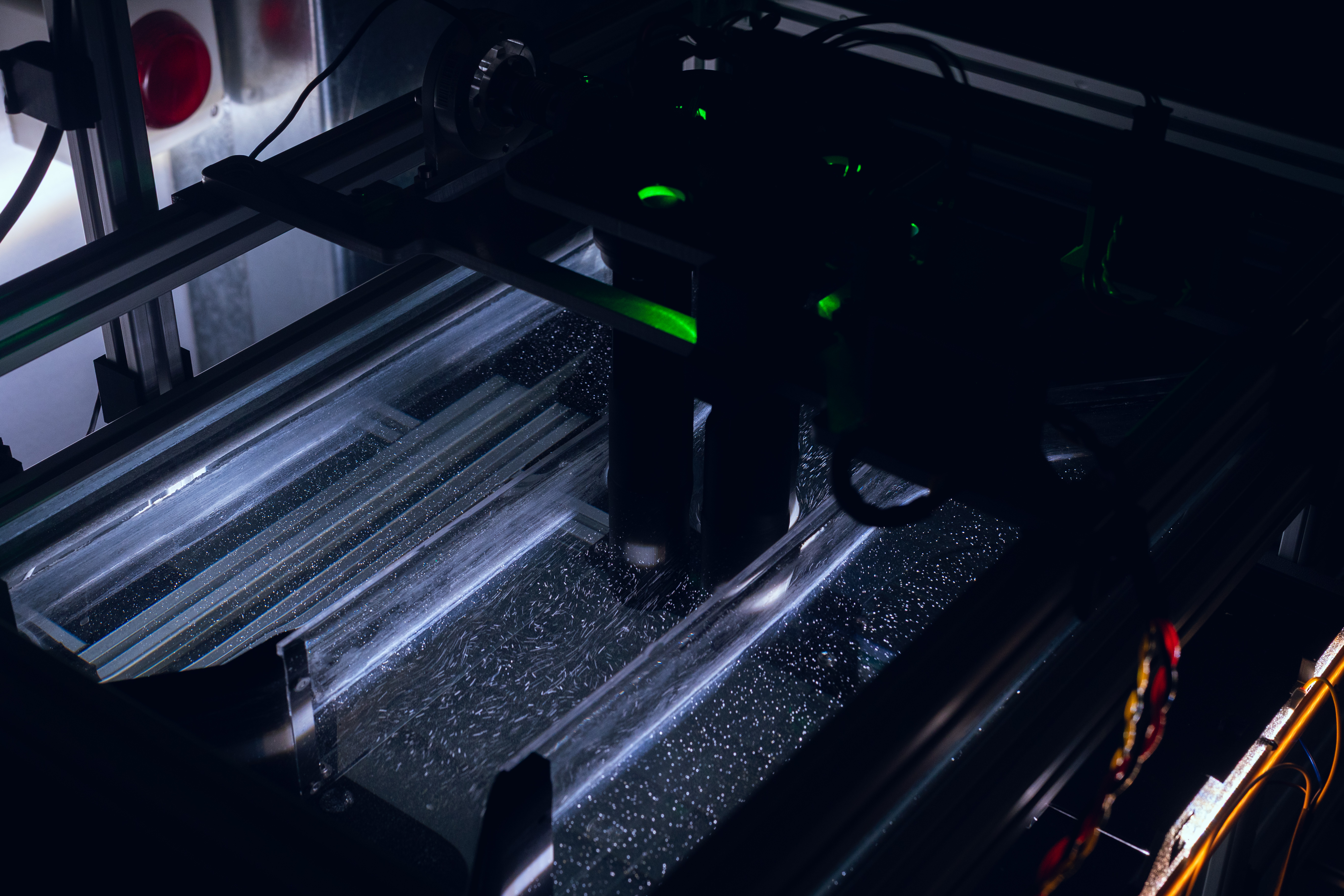
A generalist reinforcement-learning agent controls a spinning cylinder directly in a tabletop water channel. With dense wake observations during training, it learns within tens of minutes policies that increase or reduce drag. The resulting action trajectories can then be replayed open loop, without flow observations, at comparable performance.

When flow observations are withheld during training, the agent still discovers high-performing drag-minimizing policies, but no run learns a high-performing drag-maximizing policy. The experiments show that privileged observations can be decisive for policy discovery even when reproducing the resulting behavior does not require them.

A reproducible water channel.

All hardware

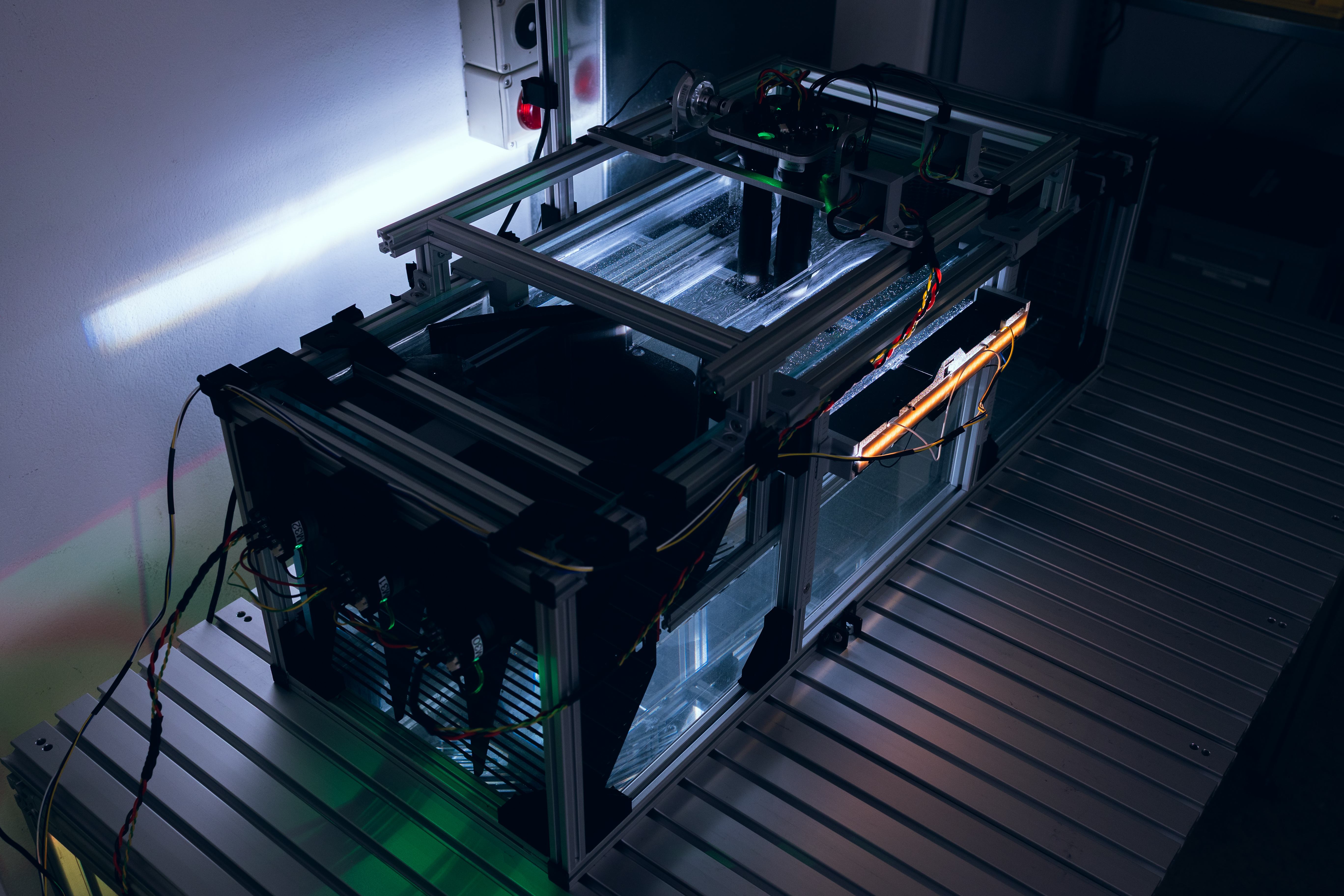
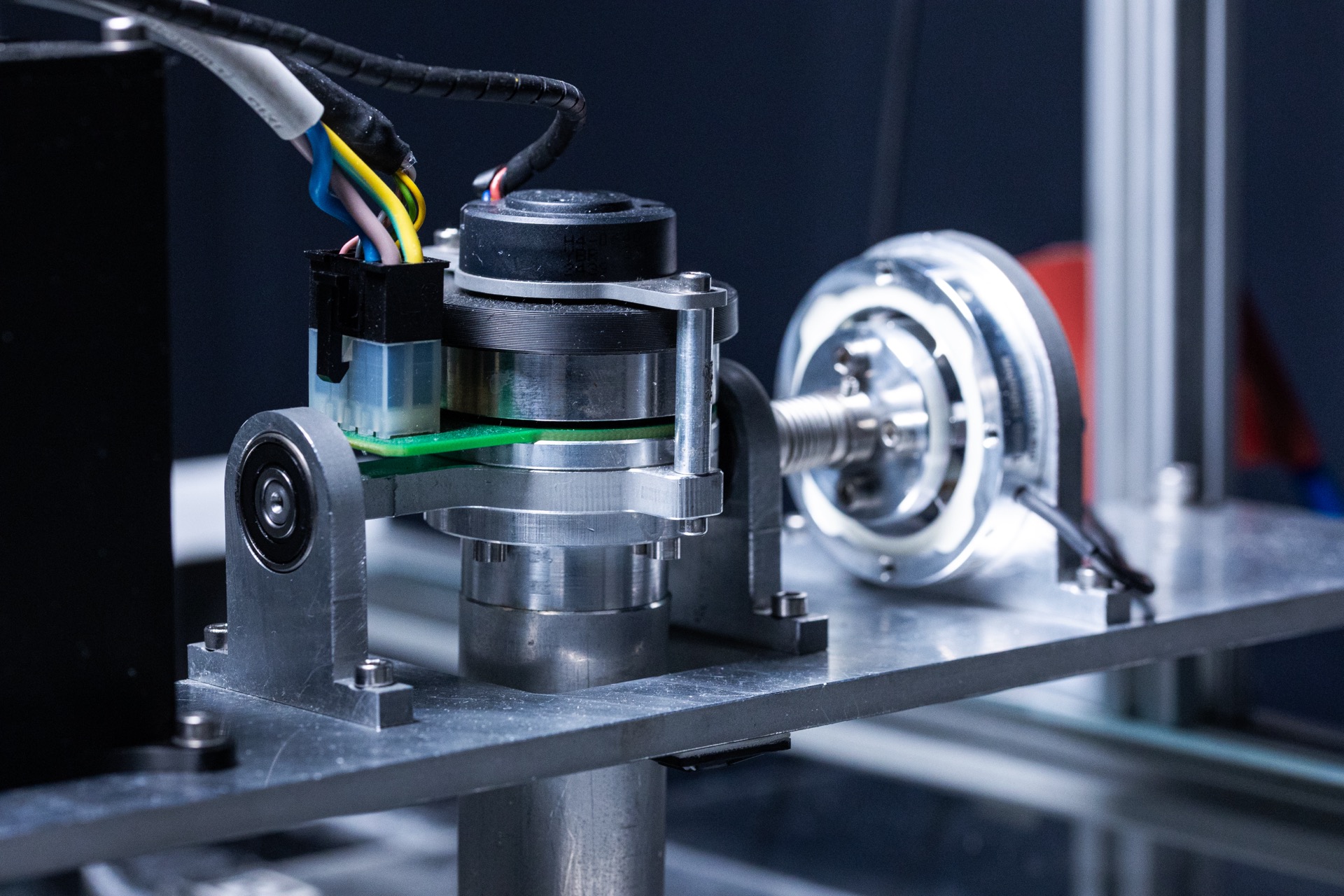
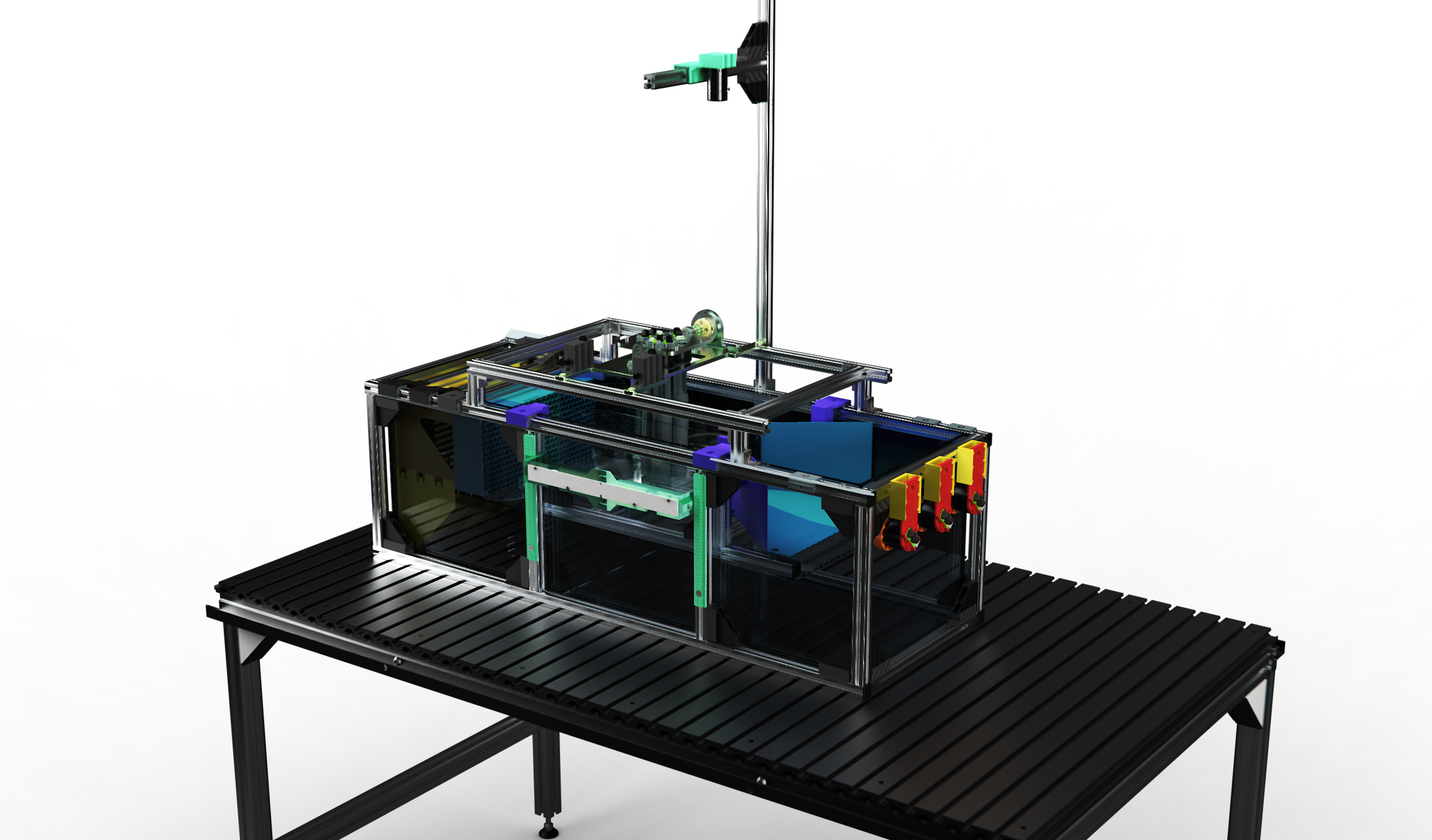
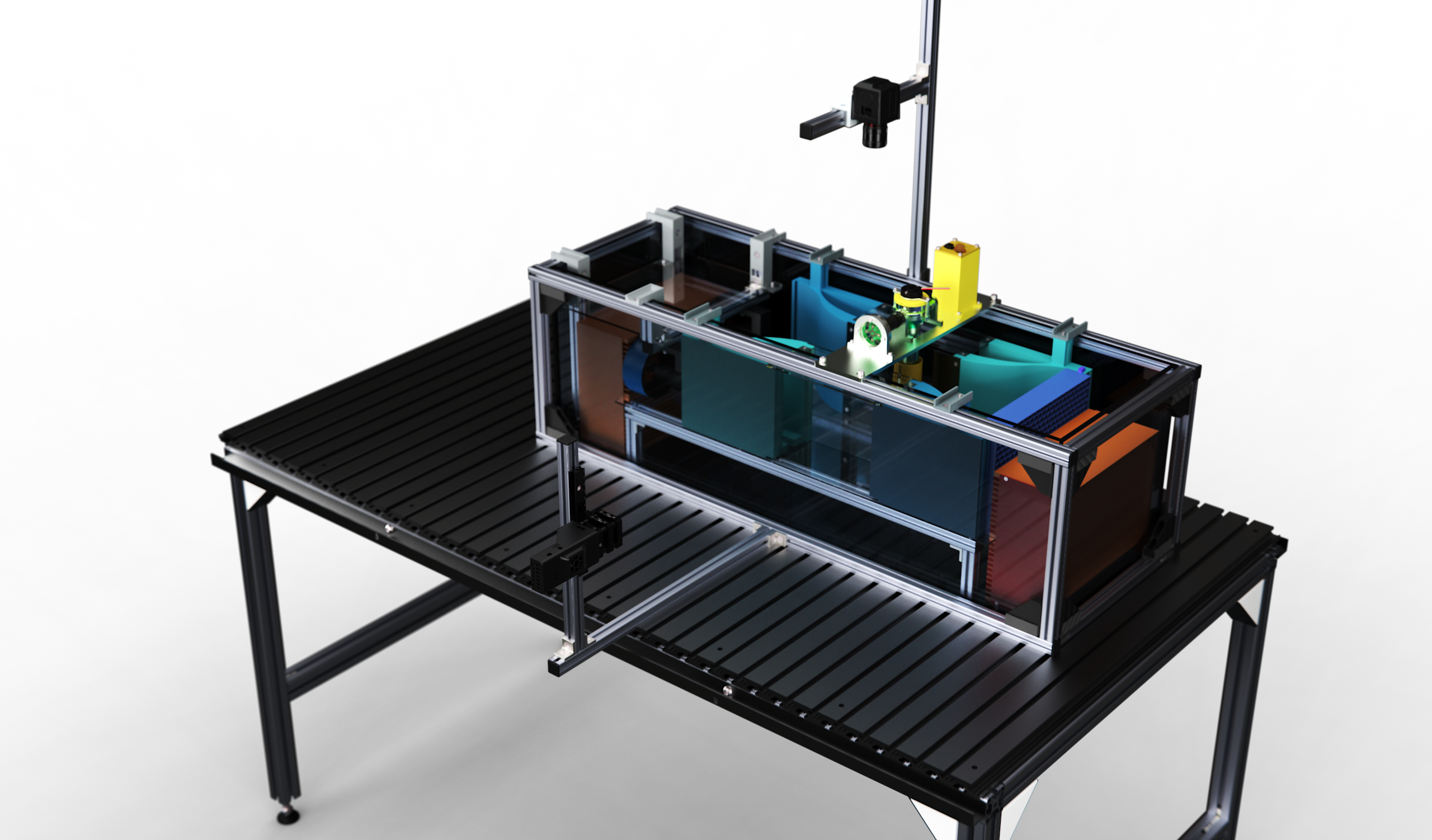
The low-cost, tabletop water channel gives researchers, students, and teachers a platform to run experiments on fluid flows. Everything necessary to reproduce the water channel lives here. Comprehensive build manuals, manufacturing files, and bill of materials are available for free under a stable URL.

A modular stack for closed-loop fluid control.

All software

The water channel is held up by a small, deliberately modular stack. FlowGames orchestrates the channel in real time; SynthPix and Flow Gym anchor the flow-quantification toolbox; Goggles and TinyROS handle middleware and observability. Each piece stands on its own and is open-source.

Water channel software stack

FlowGames

Coming soon

The software stack that runs the water channel. FlowGames exposes a single real-time loop on top of sensors, actuators, flow-field estimators, and control agents, and keeps the same interface across the physical channel and a high-fidelity simulator. The V0 stack is being released publicly alongside the V0 hardware — expect placeholders until the channel is live.

Synthetic PIV image generation

SynthPix

A JAX synthetic image generator for Particle Image Velocimetry. SynthPix streams image pairs from prescribed flow fields straight into training and benchmarking pipelines — no offline dataset, no I/O ceiling — while exposing the imaging and acquisition knobs practitioners actually tune. Built for the water channel; independently useful for lab PIV, riverine velocimetry, and adaptive acquisition design.

uv add synthpix
Flow-field quantification framework

Flow Gym

A common framework for developing, benchmarking, training, and deploying flow-field quantification methods. Classical and learning-based PIV sit behind one JAX-accelerated interface, interoperable with OpenCV and PyTorch, and the same workflow runs offline and in real time on synthetic or experimental data. It is also our path to 3D and tomographic PIV.

uv add flow-gym-suite

From the lab.